The Thin Line: What the Hague Verdict Asks of Kosovo
Resistance was legitimate. And legitimate resistance does not license everything a person does while carrying it out.
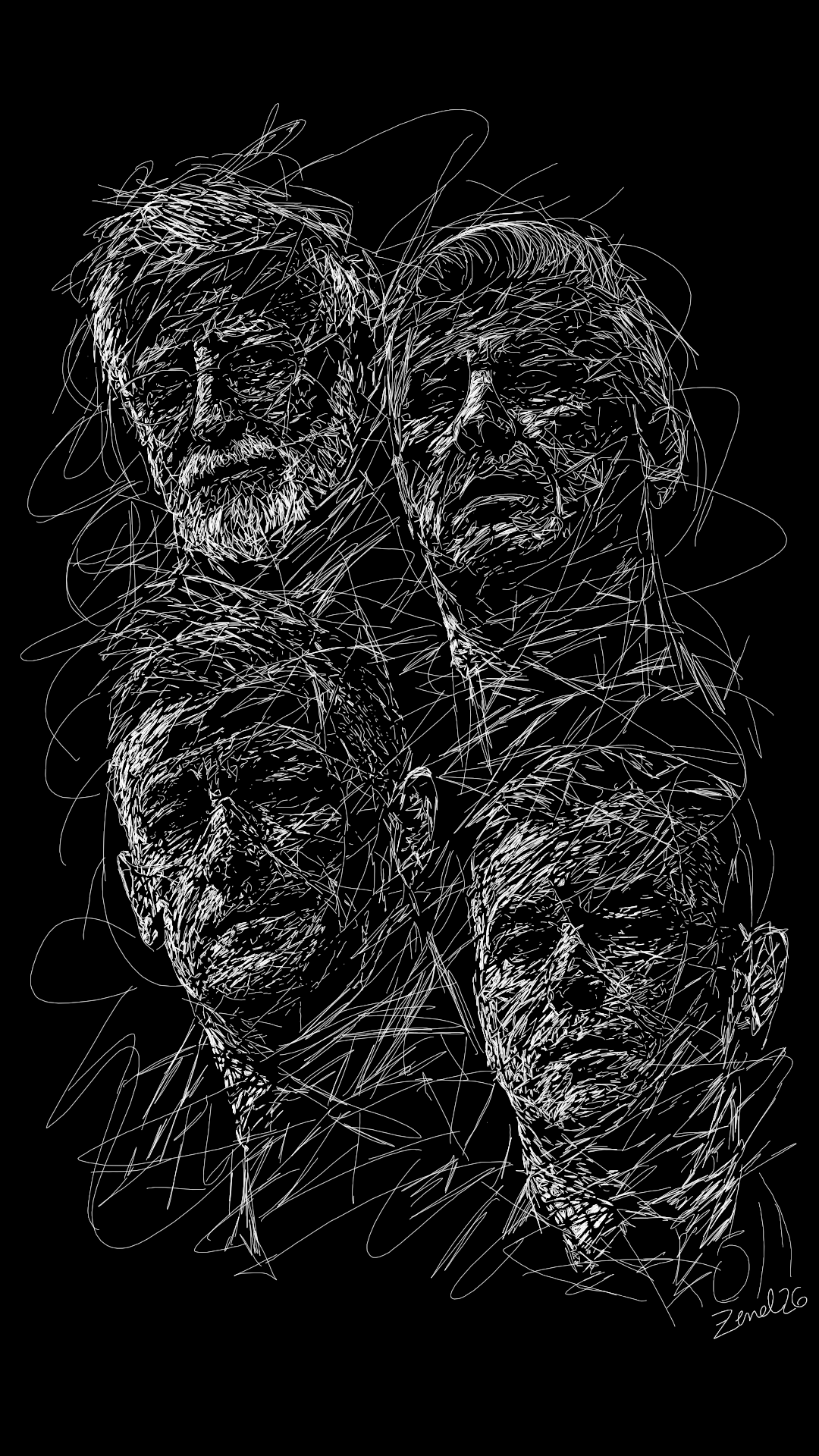
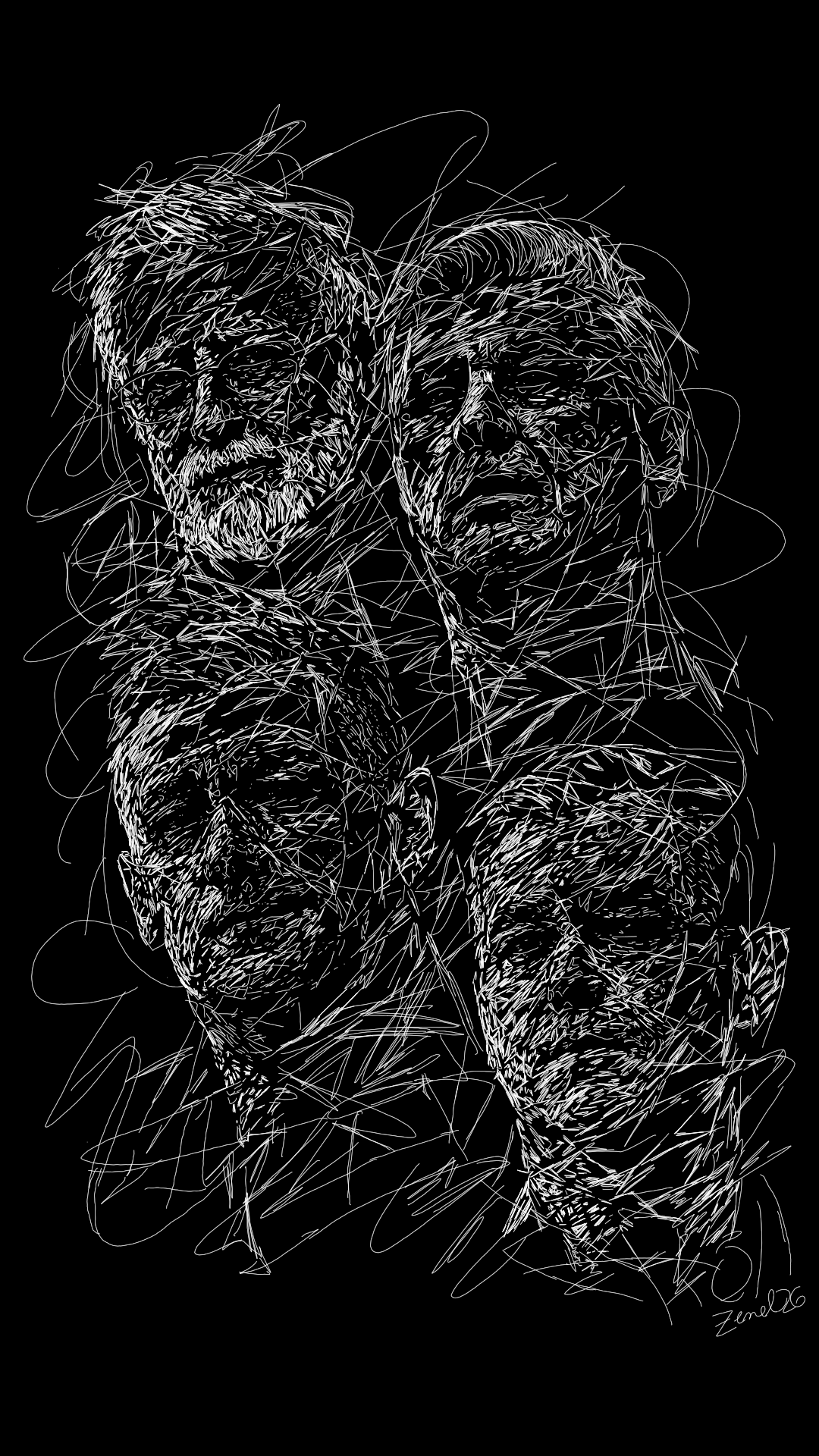
On 16 September 2026, a panel of judges in The Hague found four of the most recognisable figures of Kosovo's liberation struggle guilty of war crimes. Hashim Thaçi and Jakup Krasniqi were sentenced to 25 years, Kadri Veseli to 18 and Rexhep Selimi to 13, for illegal or arbitrary arrest and detention, cruel treatment, torture and murder. All four were acquitted of the crimes against humanity counts. In Prishtina a countdown clock had been ticking toward that morning for weeks, and within minutes of the ruling the words "not in my name" were circulating across Kosovar social media.
That reaction is worth taking seriously rather than dismissing, because it comes from a real place. It also needs to be separated from the question of what actually happened in certain cellars and barns in 1998.
Start with the label. The Kosovo Liberation Army has spent thirty years being called two different things depending on who was speaking and when. In early 1998, American officials publicly described it as a terrorist organisation. Within a year, NATO aircraft were doing the work of its air force. Nothing about the men in the hills changed in those twelve months. What changed was the world's tolerance for what was being done to Albanians in Kosovo. The category of freedom fighter is not a description of behaviour. It is a verdict rendered by whoever has the microphone, applied backwards, and revised whenever convenient.
This is why arguing about the label is a trap. If you defend the KLA by insisting it was a liberation movement, you have accepted that the label settles the moral question, and that means you have accepted that Belgrade wins if it ever succeeds in flipping the label back. The stronger ground is simpler and harder. Kosovo's cause was just. An entire population was being stripped of jobs, schools, language and finally of life itself. Resistance was legitimate. And legitimate resistance does not license everything a person does while carrying it out.
War is a machine for destroying judgment. It removes the police, the courts, the press and the ordinary social feedback that keeps a twenty year old from concluding that his neighbour is an informer. It compresses decisions that should take weeks into minutes, and it hands those decisions to exhausted, frightened people who have just buried family members. Under that pressure, suspicion becomes evidence, rumour becomes proof, and the category of the enemy starts expanding outward from the actual enemy toward anyone inconvenient. None of this is unique to Kosovo. It is what happens to insurgencies in general, from Algeria to Ireland to Vietnam. Understanding that mechanism explains how ordinary people end up doing terrible things. It does not make the things less terrible, and it does not make the dead less dead.
Which brings us to the part of this verdict that most of the public argument is carefully stepping around: who the victims actually were.
The comfortable assumption is that a case against KLA commanders must be a case about Serbs. It is not, or not mainly. The court found that the four men contributed to a common purpose of targeting perceived opponents of the KLA's political and military goals, including Kosovo Albanians linked to other political or military forces such as the LDK and FARK, people alleged to be tied to Serbian authorities, and some members of minority communities, including a number of Roma and Serbs. With limited exceptions, the panel found no evidence that any of the victims had taken part in hostilities or posed any legitimate security concern. The figures attached to the judgment are arbitrary detention of 385 people, cruel treatment of 49, torture of 303 and murder of 96.
The public summary gives no ethnic breakdown of those numbers, and while it names Serbs and Roma as victims in general terms, the specific episodes it sets out in detail centre on Kosovo Albanians connected to the LDK, to FARK, to Rugova's structures or to other Albanian political currents, people labelled spies, traitors and collaborators. One documented episode concerns the activist Behajdin Allaqi, an Albanian involved in the national movement, whom the panel found Thaçi was personally involved in capturing, detaining, transferring and killing. Another concerns the detention of thirteen members of an Albanian parliamentary delegation in Qirez and Baicë in September 1998.
Sit with that. This was, to a significant degree, Albanians doing this to Albanians. It was a fight over who would own the resistance and, afterwards, who would own the state. The people who disappeared were frequently not the people shooting at us. Some of them were people who wanted a different Kosovo, or the same Kosovo by other means, or who simply had a Serbian friend or a job at a Serbian firm. Their families are Kosovar families. They have been waiting almost thirty years while the country told itself a story in which those deaths did not fit.
Pursuing that is not an attack on Kosovo. It is the most Kosovar thing available. A state that claims to have been born out of a demand for rights cannot tell one category of its own citizens that their dead do not count because of who killed them. The presiding judge was explicit that the case was "not about the legitimacy of the Kosovo Liberation Army", and criminal responsibility before that court is individual. Four men convicted is four men convicted. It is not a nation convicted, and only Belgrade benefits from us pretending otherwise.
And yet the anger is not irrational, because the asymmetry is grotesque. The Humanitarian Law Center estimates at least 8,000 Albanian civilians were killed during the war, while in all proceedings concluded before Serbian courts, criminal responsibility has been established for the killing of only 77. Between 2014 and 2024, Serbia's war crimes prosecutor brought no new indictment based on a newly opened investigation into crimes against Kosovo Albanians, while bringing nine indictments against Kosovo Albanians. Around 1,600 people are still missing, roughly two thirds of them Albanians. Meanwhile the senior officers who were convicted in The Hague came home to official embraces, lecture invitations and party posts, with a sitting Serbian defence minister declaring at an army event that the time of shame was over. There is no special chamber for Belgrade. There is no countdown clock for the commanders of Reçak or Krusha. The state that emptied Kosovo has been allowed to carry its own perpetrators back into public life with medals and celebrate Ratko Mladić, one of the most inhumane war criminals of recent times, like a saint after his recent death, The correct response to the second injustice is not to deny the first. It is to insist loudly that the standard applied to us in September be applied to Belgrade next, and to keep insisting until someone answers.
Freedom fighter or terrorist was never the real question. The real question is what was done to the man in the cellar, who is willing to say his name and who is being prosecuted and who isn’t.