The Weight of the Sworn Word
Custom, autonomy, and the long journey of the Albanian woman, from the Kanun and the sworn virgins to a country where most ministers are women and a countryside where daughters still sign away their inheritance.
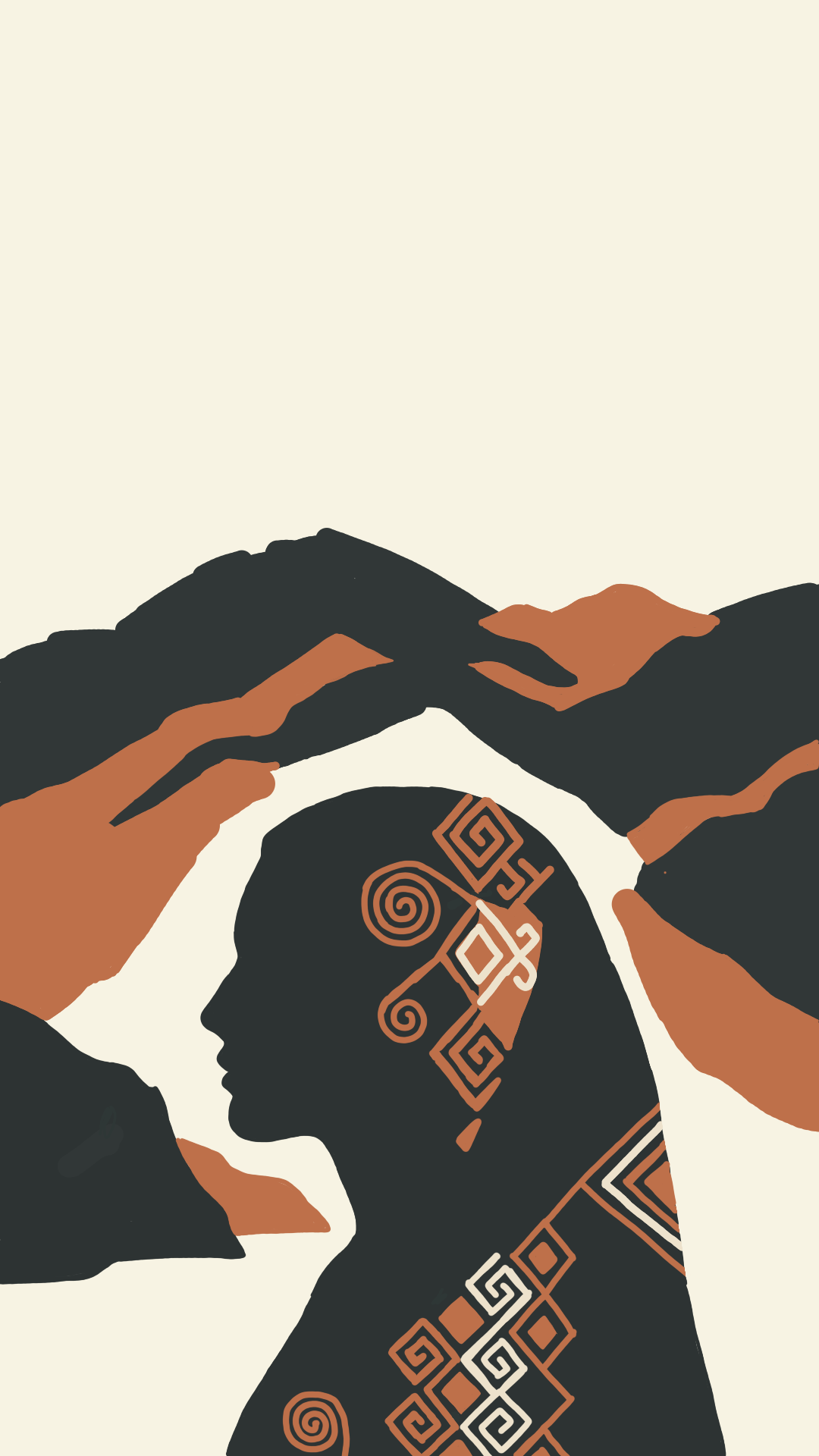
Albania has one of the most female cabinets in the world. Twelve of its seventeen ministers are women, and five of the eight specialised committees in its parliament are chaired by women.
It is also a country where only 8% of registered land stands in a woman's name, and where a daughter is still commonly described as a guest in the house she was born in.
Both things are true at once. Neither is a leftover the other has not caught up with yet. They are two halves of one arrangement, and to see how they came to fit together you have to go back a long way.
Before Rome
It was not always like this. Before Rome, Byzantium and the Ottomans arrived, the western Balkans were inhabited by Illyrian tribes, widely taken to be the ancestors of modern Albanians. Where Greece and Rome shut women inside the household and treated them as their husbands' property, Illyrian society gave them something close to equality. Greek and Roman writers noticed, with a mixture of fascination and disapproval: Illyrian women sat beside men at public feasts, and among some tribes they could own property in their own right, a legal standing Roman law denied its own women.
The clearest case is Queen Teuta, who ruled the Ardiaean Kingdom from about 231 BC after her husband died. She held military and diplomatic power and commanded a fleet that dominated the Adriatic. Told by Roman ambassadors to stop the piracy troubling Italian merchants, she answered that it was contrary to the custom of Illyrian kings to stop their people winning booty from the sea. Rome defeated her in 228 BC, but Teuta is still one of the most common names given to Albanian girls.
What followed was a long retreat. The relative equality of tribal life gave way to the stratified male systems of one occupier after another, and women lost the right to inherit and to sit in public assemblies. By the time that order reached the northern mountains, the household had become a space of unquestioned male authority.
The Kanun
The northern highlands stayed largely beyond the reach of whichever empire claimed them. With no state to answer to, the highlanders ran their own body of customary oral law: the Kanun. Several regional versions existed, but the Kanun of Lekë Dukagjini carried furthest. Its 1,262 articles passed orally through tribal elders for five hundred years before the Catholic priest Shtjefën Gjeçovi wrote them down in the early twentieth century. It governed property, hospitality, marriage and the ritual practice of blood vengeance, gjakmarrja. The stability it produced came at a price, and women paid almost all of it.
A woman under the Kanun had no legal personality, no civic standing and no property. She was handed from her father's household to her husband's. Gjeçovi's compilation is not coy about it. It defines a woman as "a sack, made to endure as long as she lives in her husband's family," and states plainly that "the blood of a woman is not equal to the blood of a man." In the arithmetic of the blood feud her life was worth half of a man's.
Her marginality began before birth. A pregnant woman was greeted with a wish that it be a son, because a daughter was of no use to the continuity of the line. Marriages were arranged by the male heads of the two families, often while the children were in their cradles, and the girl had no right to refuse. If she resisted, the Kanun instructed that she be handed to the groom's family by force, along with a single bullet. If she then ran, her husband could shoot her with her own parents' cartridge, and no feud followed, because her family had authorised the killing in advance. Article 33 grants the husband the right to advise and correct his wife, spelled out to include beating her when she does not obey.
And yet the code contained a real contradiction. Having stripped the woman of every kind of agency, it then placed her under a protection men did not have. The blood feud could not touch a woman or a child. If two enemies were shooting at each other on a mountain path and a woman stepped between them, both were obliged to lower their rifles and stop. To assault a woman was the ultimate dishonour, capable of ruining a family's name for seven generations. This was not respect for human rights. It followed from the belief that women, having no say in the decisions of the tribe, were not combatants in the wars of men.
Daily life was less passive than the written code suggests: at home the lady of the house directed the labour of every other woman in the family. It was inside this framework, which denied women everything while guarding their honour, that the burrnesha appeared.
Burrnesha
Two pressures made the sworn virgin necessary. Inheritance passed strictly through the male line, and the blood feud killed men at a rate that regularly left families without one. The burrneshë, plural burrnesha, was not a rebellion against customary law. She was a workaround the Kanun itself allowed, a valve that let the pressure out of a rigid system so that families could keep their land and their honour without any of the rules about women having to change.
Three situations led a person born female to take the oath. A man who died leaving only daughters left his family facing collapse, since the land would pass to distant male relatives, and a daughter could take the vow and inherit instead. Refusing an arranged marriage could start a feud lasting generations, and swearing lifelong celibacy before twelve elders was the one honourable exit. A widow who did not want to remarry could swear the same oath and stay on as head of the household.
The change was total and irreversible. Her name was retired and replaced by a man's: Sokol, Mark, Lulash. She burned her girl's clothes and put on the highland male dress, thick wool trousers, a leather belt carrying a knife or a pistol, and the white felt cap that was the signature of Albanian manhood. In return for renouncing marriage and motherhood she received everything the law reserved for men. She could carry firearms, speak with full authority in councils that admitted no women, and sit at the men's table. She was also obliged to take part in the blood feud if her family's honour required it. Her community did not see her as a woman in men's clothes. She was a social man, and treated as a full citizen.
The custom has attracted a careless Western gaze. From Edith Durham in 1908 through to modern documentary crews, writers have presented the burrnesha as exotic specimens, curiosities from a violent corner of the Balkans, and the burrneshë herself as a victim forced into an unnatural bargain. Jeta Luboteni's A Heavy Word takes that apart. Listen to what the burrnesha say about their own lives and a different picture appears: not a tragedy imposed from outside but a calculated and liberating act, the only route to freedom, safety and standing in a society that offered women no existence outside marriage. Asked by a foreign journalist whether he regretted the oath, the burrneshë Bedri cut him off:
Oh man! I am happy, and I chose this life with the greatest will and greatest pleasure of my soul, and I will live it to the end!
The institution proves that gender is malleable, that even one of the most patriarchal societies in the world could let the line be crossed and then absorb the crossing. It remains a conservative bargain all the same. The burrneshë could claim a man's rights only by performing masculinity, and in doing so she confirmed the system rather than challenging it. Every other woman in the village was left where she was. The conditions that sustained the custom have gone, and perhaps a dozen elderly burrnesha remain.
The forerunners
While the mountains produced the burrneshë as a workaround, the towns produced something else: women who wanted the patriarchal order dismantled rather than got around. They did not escape womanhood by performing masculinity. They claimed a voice as women.
Elena Gjika (1828 to 1888), who wrote as Dora d'Istria, was educated across half of Europe and published in Paris, Brussels and Florence on social and feminist questions. Her 1866 study of Albanian nationality, drawn from folk song, made her the leading Western advocate of the Albanian National Awakening, and the reason much of Europe heard about the Balkan struggle against Ottoman rule at all.
If Dora d'Istria is the nineteenth century awakening, Musine Kokalari (1917 to 1983) is what the twentieth did to it. In 1941 she published a collection of prose tales in her native Gjirokastrian dialect, recognised as the first literary book published by a woman in Albania, and in 1943 she helped found the Social Democratic Party and its paper. Hoxha's takeover ended that life. Partisans executed her two brothers without trial in November 1944, and she was arrested in January 1946. At her trial in Tirana, in front of a mob screaming for her execution, she refused to trim her convictions:
I don't need to be a communist to love my country. I love my country even though I am not a communist. I love its progress... You are punishing me for my ideals!
She served eighteen years in Burrel prison, then was interned in a northern town, put to work sweeping streets and forbidden to write. She died in 1983, and was posthumously declared a Martyr of Democracy.
The state as emancipator
The communist regime under Enver Hoxha abolished the customary codes, closed the religious organisations, and ran a campaign of emancipation enforced by the state. The motive was partly economic: a Stalinist development model needed labour, and the largest untapped reserve of it was female.
On paper the results were extraordinary. Female illiteracy stood at 92% in 1945 and had fallen below 8% by 1989. Women went into paid work in numbers with no precedent in Balkan history, and a quota reserved them roughly 30% of the seats in parliament.
The contradiction was structural. The public sphere was modernised aggressively while the domestic sphere was left alone. The state turned women into productive units and did nothing about the division of labour at home. Hoxha noticed the limit himself, calling woman "the proletarian of man" in a 1955 speech, while state propaganda went on celebrating the mother who sacrificed everything. What resulted was the double burden: manual and industrial work all day for the state, then sole responsibility for cooking, cleaning and children in households still run on entirely conservative lines.
After 1991
The regime collapsed in 1991 and the country fell into shock. The move to an unregulated market took away the guaranteed employment that had underwritten women's position, more or less overnight. It bottomed out in 1997, when the pyramid schemes wiped out most of the population's savings and the country dissolved into anarchy.
What happened next is better described as a mutation than a gradual change. With public services gone, many families responded by pushing women back into the home, and the share of women in parliament fell from 30% to 6%. Conservative political and religious figures, back in public life after decades of suppression, promoted traditional roles as a sacred part of national identity, and in districts where institutions had stopped functioning, customary law came back, blood feud included.
The state has since made real formal advances, driven partly by the wish to present a European face. It now ranks among the world's leaders in political gender parity. Underneath sits a different set of facts, and the sharpest clash is over land. The Constitution guarantees equality in inheritance. Custom, which is written nowhere, denies it. The assumption that a girl does not really belong to the house she is born in, because she will marry into another, makes her a guest, and a guest does not expect a share of the property. The mechanism is family pressure rather than law, and it works: most Albanian women formally sign their inheritance over to their brothers to keep the peace.
That is how 8% of the land comes to be registered to a woman. Without property there is no collateral, without collateral no credit, and nothing to fall back on if a marriage turns dangerous. It is economic violence, reinforced for decades by a land registry that recorded property in the name of the male head of the family and nobody else.
The guest in her own home
None of this is a story of steady progress interrupted. It is a divided terrain, and Albanian women live on both sides of it at once: a constitutional sphere that promises equality, and a domestic sphere still shaped by custom, honour and shame.
Closing that gap needs more than legislation, because the legislation already exists and is being ignored. It needs enforcement where the decisions actually happen: matrimonial property law applied strictly at the notary's desk, and the legacy of the male head of the family stripped out of land registration.
The point of all of it is to change one assumption. As long as a daughter is a guest in her own home, none of the rest holds. When she is a permanent stakeholder in her family's property, the unwritten code has finally been answered.
Suggestions
- Wo/men (2024), directed by Kristine Nrecaj and Birthe Templin. A documentary in which six burrnesha speak about their own lives, which is the corrective this essay argues for: not exotic specimens, but people explaining a decision they made.
- The Albanian Virgin (1994), Alice Munro, collected in Open Secrets. A Canadian woman ends up in the northern highlands living as a sworn virgin.
Sources
- Code of Lekë Dukagjini. Shtjefën Gjeçovi, Gjonlekaj Publishing Company, 1989.
- A Heavy Word: Discourses on Albanian Sworn Virgins. Jeta Luboteni, East European Journal of Feminist and Queer Studies, Vol. 3, 2020.
- An insight into the life of Albanian women in traditional and modern society. Jessica Cenek Koprlová, Studia Ethnologica Pragensia, 2/2019.
- The impact of rural emptiness on gender relations in postsocialist Albania. Sally Brooks and Merita H. Meçe, Sociologia Ruralis, 2022.
- Albanian Women after Socialism and the Balkan War. Marina Calloni, Jura Gentium, 2002.